

What Is Organic Cotton?
Why It Feels Better, Lasts Longer & Is Better for Your Skin
Some garments earn a permanent place in your wardrobe.
They’re the T-shirts you reach for before a busy day, the ones you pack for every trip and the pieces that somehow feel even softer with time. While style certainly plays a role, true wardrobe favorites have one thing in common: exceptional comfort.
That feeling often begins with the fabric itself.
Organic cotton is frequently associated with sustainability, but the first benefit you’ll notice has nothing to do with the environment. It’s the softness against your skin, the natural breathability that keeps you comfortable throughout the day, and the reassuring quality of a garment made to last.
At Kay Pacha, we believe sustainability should never come at the expense of comfort or style. Instead, it should be the reason exceptional quality exists. Every step, from carefully cultivating cotton to responsibly crafting each garment, is designed to preserve the natural qualities of the fiber while respecting the people and landscapes behind it.
In this guide, we’ll explore what organic cotton is, why it feels different from conventional cotton and how choosing certified organic cotton clothing can elevate both your wardrobe and your everyday comfort.
What is Organic Cotton?
Organic cotton is cotton grown using farming methods that work with nature rather than against it. Unlike conventional cotton cultivation, organic agriculture prohibits the use of synthetic fertilizers, pesticides and genetically modified (GM) seeds. Instead, farmers use natural practices such as composting, green manure and crop rotation to build healthy, fertile soils and encourage biodiversity.
This definition applies to organic agriculture as a whole and is supported by organizations such as the World Wildlife Fund ( WWF). Healthy soils not only support resilient crops but also improve water retention and promote thriving ecosystems.
However, when it comes to clothing, growing organic cotton is only part of the story.
The highest-quality organic cotton garments are often certified by the Global Organic Textile Standard (GOTS), the world’s leading processing standard for organic textiles. GOTS goes beyond farming by ensuring responsible practices throughout the entire production process, from spinning and dyeing to manufacturing and packaging.
The certification also restricts the use of hazardous chemicals and toxic dyes, requires responsible water and wastewater management, and includes strict social criteria that protect workers’ rights throughout the supply chain.
For consumers, this means greater confidence that the garment you’re wearing has been produced with care for both people and the planet—not just at the farm, but every step of the way.
The Benefits of Organic Cotton You Can Feel Every Day
The true value of premium organic cotton isn’t only found in how it’s grown, it’s in how it feels every time you wear it.
1. Softer Comfort That Lasts
One of the reasons people fall in love with premium organic cotton clothing is its exceptional softness.
While softness depends on several factors, including the cotton variety, spinning process and fabric construction, premium organic garments are often made using carefully selected cotton fibers and gentler processing methods that preserve the fabric’s natural feel.
Unlike some conventional textile processes, GOTS certification restricts many harsh chemical treatments used during manufacturing. As a result, the cotton retains more of its natural softness, creating a fabric that feels comfortable from the first wear and continues to soften beautifully over time with proper care.
At Kay Pacha, we believe clothing should feel as good on your hundredth wear as it does on your first.
2. Naturally Breathable for Everyday Comfort

Whether you’re exploring the streets of Paris in spring, enjoying a summer evening on the Costa Brava or layering up during autumn, comfort depends on how well your clothing adapts to changing temperatures.
Cotton is naturally breathable because its fibers allow air to circulate while absorbing moisture from the skin. This helps create a comfortable microclimate around your body, reducing the feeling of overheating during warmer days while remaining comfortable beneath knitwear and jackets when temperatures drop.
Research in textile science consistently recognizes cotton for its moisture management and thermal comfort properties, making it one of the world’s most versatile natural fibers.
For anyone building a timeless wardrobe, breathable essentials aren’t simply a luxury—they’re garments you’ll reach for throughout the year.
Discover timeless essentials designed for everyday comfort.
2. Naturally Breathable for Everyday Comfort
Whether you’re exploring the streets of Paris in spring, enjoying a summer evening on the Costa Brava or layering up during autumn, comfort depends on how well your clothing adapts to changing temperatures.
Cotton is naturally breathable because its fibers allow air to circulate while absorbing moisture from the skin. This helps create a comfortable microclimate around your body, reducing the feeling of overheating during warmer days while remaining comfortable beneath knitwear and jackets when temperatures drop.
Research in textile science consistently recognizes cotton for its moisture management and thermal comfort properties, making it one of the world’s most versatile natural fibers.
For anyone building a timeless wardrobe, breathable essentials aren’t simply a luxury—they’re garments you’ll reach for throughout the year.
Discover timeless essentials designed for everyday comfort.
3. A Better Choice for Sensitive Skin
Many people choose organic cotton clothing because they want fabrics that feel gentle against their skin.
It’s important to clarify one common misconception: organic cotton itself isn’t inherently hypoallergenic. However, certified organic cotton garments are typically processed using fewer potentially irritating chemicals, dyes and finishing agents than conventional textiles.
According to the Global Organic Textile Standard (GOTS), numerous hazardous substances commonly used in textile processing are prohibited or strictly restricted. Because skin irritation is often linked to chemical finishes rather than the cotton fiber itself, fabrics produced under these standards may be a better option for people with sensitive skin.
The result is simple: clothing that feels comfortable to wear every day, especially when comfort matters most.
For us, luxury isn’t about excess, it’s about creating garments you’ll genuinely enjoy living in.
3. A Better Choice for Sensitive Skin
Many people choose organic cotton clothing because they want fabrics that feel gentle against their skin.
It’s important to clarify one common misconception: organic cotton itself isn’t inherently hypoallergenic. However, certified organic cotton garments are typically processed using fewer potentially irritating chemicals, dyes and finishing agents than conventional textiles.
According to the Global Organic Textile Standard (GOTS), numerous hazardous substances commonly used in textile processing are prohibited or strictly restricted. Because skin irritation is often linked to chemical finishes rather than the cotton fiber itself, fabrics produced under these standards may be a better option for people with sensitive skin.
The result is simple: clothing that feels comfortable to wear every day, especially when comfort matters most.
For us, luxury isn’t about excess, it’s about creating garments you’ll genuinely enjoy living in.
4. Made to Be Worn for Years, Not Seasons

One of the most overlooked benefits of organic cotton is that it encourages a different way of thinking about fashion. Instead of buying more, you invest in garments designed to stay in your wardrobe for years.
It’s worth noting that organic cotton isn’t automatically more durable simply because it’s organic. The lifespan of a garment depends on several factors, including the quality of the cotton fibers, yarn construction, fabric weight, garment design and how it’s cared for.
However, premium brands that choose certified organic cotton also tend to prioritize craftsmanship over mass production. Higher-quality raw materials, thoughtful construction and careful finishing often result in garments that maintain their shape, softness and appearance wash after wash.
For us, durability isn’t simply about stronger fibers, it’s about creating timeless essentials you’ll want to wear for years rather than replace after a single season.
This philosophy also changes the true cost of clothing. A well-made T-shirt worn hundreds of times offers far greater value than several lower-quality alternatives that quickly lose their fit or comfort.
Organic Cotton vs Conventional Cotton
Both organic and conventional cotton are natural fibers, but the way they’re grown and processed creates important differences throughout the supply chain.
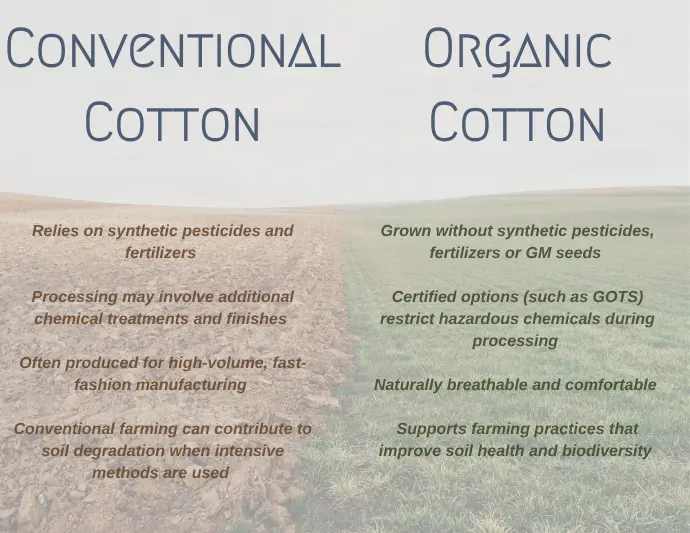
While both fabrics can feel comfortable, certified organic cotton offers additional reassurance about how the garment has been produced—from the field to the finished product.
Why Certifications Matter
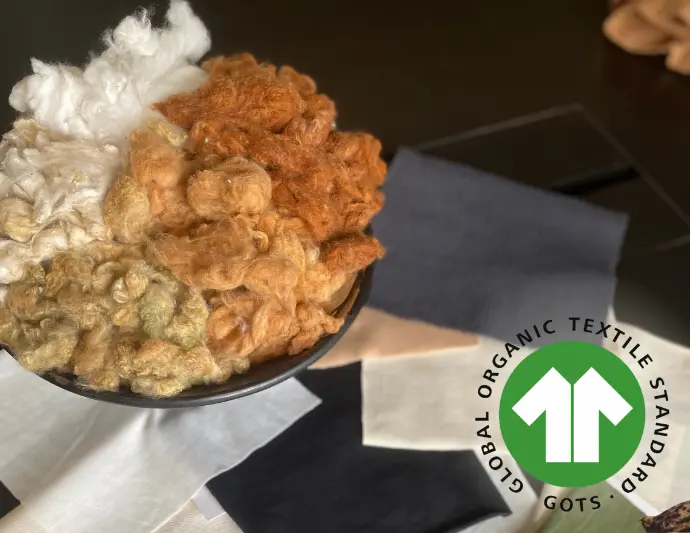
Not every garment labelled “organic” follows the same standards.
That’s why third-party certifications play such an important role.
The Global Organic Textile Standard (GOTS) is widely recognized as one of the most rigorous certifications in the textile industry. It verifies not only that the cotton has been organically grown, but also that strict environmental and social criteria are respected throughout production.
GOTS certification includes requirements such as:
- Restrictions on hazardous chemicals and toxic dyes.
- Responsible water and wastewater management.
- Environmental management throughout textile processing.
- Protection of workers’ rights and safe working conditions.
- Independent certification across the supply chain.
For consumers, certification provides confidence that the values behind a garment extend far beyond the cotton field.
Why We Choose Organic Cotton at Kay Pacha

At Kay Pacha, every collection begins with a simple belief: the clothes you wear every day should feel exceptional.
Inspired by Peru’s rich textile heritage, we create timeless essentials that combine premium organic cotton with thoughtful craftsmanship. Rather than following fast-changing trends, we focus on versatile pieces designed to become part of your everyday wardrobe.
For us, choosing certified organic cotton isn’t only about reducing environmental impact. It’s about offering clothing that feels naturally soft, breathes beautifully and is made with respect for the people who grow, craft and wear it.
Because true luxury isn’t measured by excess it’s measured by quality, longevity and the confidence of knowing exactly how your clothing was made.
Experience the comfort of consciously crafted essentials.
Why We Choose Organic Cotton at Kay Pacha
At Kay Pacha, every collection begins with a simple belief: the clothes you wear every day should feel exceptional.
Inspired by Peru’s rich textile heritage, we create timeless essentials that combine premium organic cotton with thoughtful craftsmanship. Rather than following fast-changing trends, we focus on versatile pieces designed to become part of your everyday wardrobe.
For us, choosing certified organic cotton isn’t only about reducing environmental impact. It’s about offering clothing that feels naturally soft, breathes beautifully and is made with respect for the people who grow, craft and wear it.
Because true luxury isn’t measured by excess it’s measured by quality, longevity and the confidence of knowing exactly how your clothing was made.
Experience the comfort of consciously crafted essentials.
Discover the Difference
The best clothing isn’t always the most complicated. Often, it’s the piece you reach for without thinking because it feels comfortable, fits beautifully and stands the test of time.
That’s what organic cotton represents to us.
A fabric that combines everyday comfort with thoughtful craftsmanship. A slower approach to fashion that values quality over quantity. And a reminder that what feels better for you can also be better for the people and places behind every garment.
Whether you’re building your first capsule wardrobe or simply looking for a T-shirt you’ll genuinely love wearing, choosing certified organic cotton is a small decision that can make a lasting difference.
Because sustainability begins with creating something worth keeping.
Frequently Asked Questions
- What is organic cotton?
Organic cotton is cotton grown without synthetic pesticides, synthetic fertilizers or genetically modified seeds. It uses natural farming practices such as crop rotation, composting and green manure to maintain healthy soils. - Is organic cotton better for sensitive skin?
Organic cotton itself isn’t inherently hypoallergenic. However, certified organic cotton garments are typically processed with fewer potentially irritating chemicals and finishes, making them a popular choice for people with sensitive skin. - Does organic cotton last longer?
The durability of any garment depends on fiber quality, construction and care. Premium organic cotton clothing is often designed with longevity in mind, making it an excellent investment for a timeless wardrobe. - Why is GOTS certification important?
GOTS certification verifies environmental and social standards throughout the textile supply chain, including chemical restrictions, responsible manufacturing and worker welfare. - How does organic cotton help reduce greenhouse gas emissions?
If you value comfort, craftsmanship and garments designed to last, organic cotton offers excellent long-term value. Investing in fewer, higher-quality pieces often results in a lower cost per wear than frequently replacing lower-quality clothing.
Internal Reading Suggestions
Continue exploring:
- Organic Cotton vs Conventional Cotton: What’s the Difference?
- 5 Natural Fiber Outfits for the European Summer
- What Is GOTS Certification? A Guide to Buying Truly Organic Clothing
- How to Build a Timeless Capsule Wardrobe